Cercar

Es mostren els missatges amb l'etiqueta de comentaris RÚSSIA. Mostrar tots els missatges

dilluns, 18 de maig del 2020

Haftar perde terreno in battaglia ma tenta il golpe in Cirenaica


(aggiornato alle ore 14 del 18 maggio)
Il generale (feldmaresciallo) Khalifa Haftar ha subito sconfitte militari brucianti sul fronte occidentale della Tripolitania e ha perso terreno sugli altri fronti mentre sul piano politico cerca di pararsi le spalle in Cirenaica con una sorta di “golpe” che mira a impedire al parlamento di Tobruk di estrometterlo per aprire negoziati con Tripoli.
E’ forse presto per dire se i recenti sviluppi potranno risultare decisivi nella lunga e complessa crisi libica ma certo stanno modificando la situazione di stallo determinatasi nell’ultimo anno, da quando prese il via l’offensiva dell’Esercito nazionale libico (LNA) di Haftar contro Tripoli.

Lo scontro per il controllo dei cieli 
L’intervento militare turco su vasta scala con mezzi, droni, navi da guerra e migliaia di mercenari reclutati in Siria ha permesso alle forze del Governo di accordo nazionale (GNA) di conquistare tutto il territorio costiero tra Tripoli e il confine tunisino e le forze di Haftar sembrano sul punto di perdere anche la base aerea di al-Watiya, ultimo baluardo dell’LNA in quella regione, che resiste da settimane all’assedio e ai raid aerei dei droni turchi Bayraktar TB2.
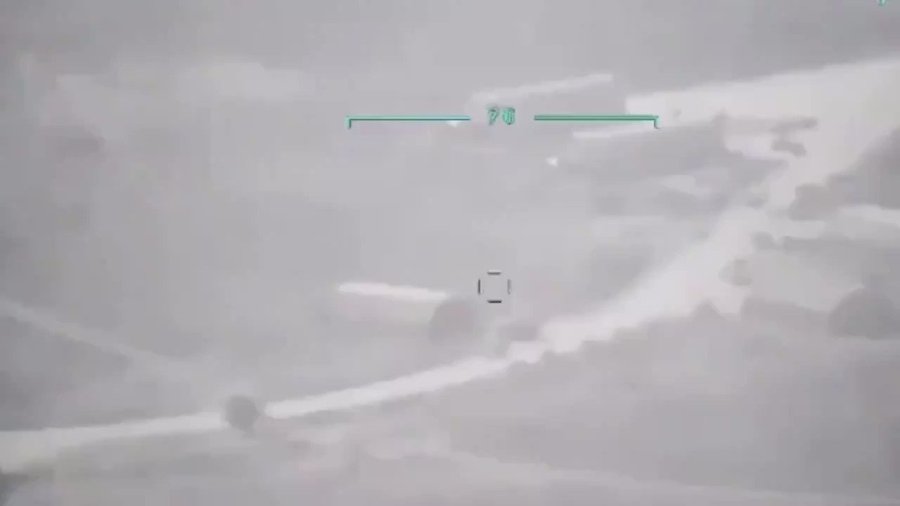
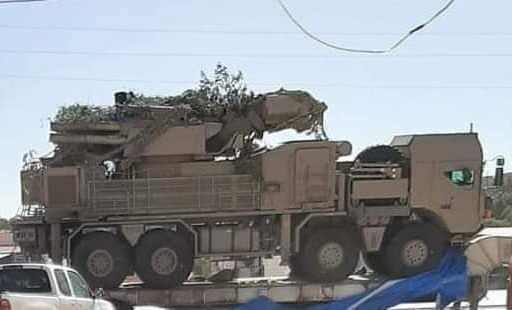
Nelle ultime ore il GNA ha reso noto un video che mostrerebbe il lancio di un missile da un drone turco contro uno shelter corazzato nel quale si suppone fosse nascosto un sistema di difesa aerea Pantsir S1 fornito dagli Emirati Arabi Uniti all’LNA.
Il comando delle forze di Haftar a Bengasi ha invece annunciato ieri era che un analogo sistema antiaereo avrebbe abbattuto (nella foto d’apertura) ieri un drone turco, probabilmente un TAI Anka, mentre sorvolava la base aerea di al-Watiya, 140 chilometri a sud di Tripoli e a 30 chilometri dal confine tunisino. Benchè parzialmente distrutto dagli scontri e soprattutto dai bombardamenti del GNA dell’ultimo mese, l’aeroporto ha un valore strategico per entrambi i contendenti.
La mattina del 18 maggio il GNA ha annunciato di aver occupato la base aerea di al-Watiya.  “Il generale Osama al-Juwaili, capo della Sala operazioni congiunte ha reso noto che le nostre forze eroiche hanno preso il controllo della base aerea di al-Watiya” si legge sull’account Facebook dell’ Operazione “Vulcano di rabbia”.
Pantsir_Libya-1
La notizia è stata confernata dallo stesso capo del governo di Tripoli, Fayez al-Sarraj.
Il possesso della base aerea avrebbe permesso all’LNA di riprendere in futuro l’offensiva nell’ovest della Tripolitania; la sua conquista invece consentirà al GNA di cancellare la presenza nemica in quella regione mentre secondo alcune indiscrezioni alla base sarebbe interessata l’Aeronautica Turca che vorrebbe rischierarvi alcuni caccia F-16C per affiancare i droni Bayraktar oggi impiegati da Mitiga, Misurata e da altre piccole piste d’aviazione nei dintorni di Tripoli.
La presenza degli F-16C turchi nei cieli libici è già stata segnalata da alcune fonti d’intelligence ma sarebbe sporadica per la necessità di far decollare i caccia dalla Turchia rifornendoli in volo sul Mediterraneo con le aerocisterne KC-135. Oltre a questi velivoli la Turchia impiega sulla Libia anche aerei cargo C-130 e aerei radar Boeing E-7T oltre ai velivoli teleguidati Anka e Bayraktar.
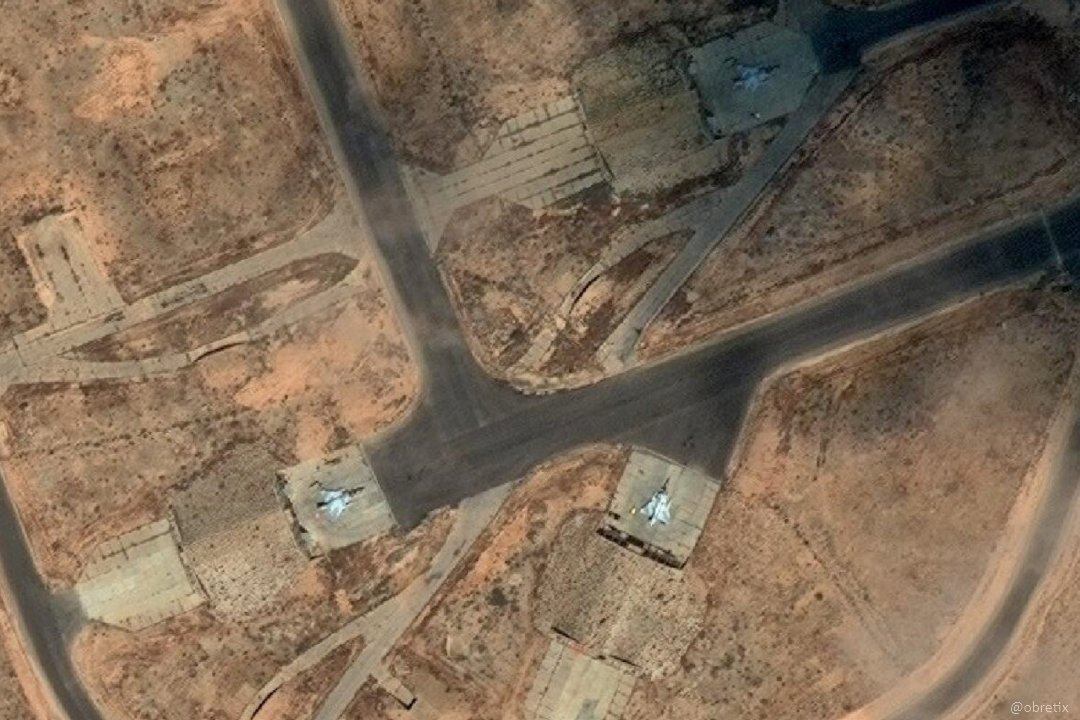
Un’iniziativa che rappresenterebbe la risposta di Ankara al recente rischieramento in appoggio all’LNA di almeno 6 Mirage 2000 emiratini nella base aerea di Sidi el-Barrani, nell’Egitto occidentale non lontano dal confine libico, svelati da alcune foto satellitari (qui sotto).
EXWgAr-U4AU0Ivf
L’obiettivo di Abu Dhabi, che già da tempo schiera nella base di al-Khadim, non lontano da Bengasi, elicotteri, droni Wing Loong 2 e aerei antiguerriglia AT-802U a supporto dell’LNA, è bilanciare la superiorità nei cieli acquisita negli ultimi mesi dal GNA grazie all’intervento della Turchia che sembra aver pagato il successo con la perdita di almeno 32 droni in turco dal novembre 2019.
Inoltre l’LNA ha reso noto nei giorni scorsi di aver ripristinato l’efficienza operativa di 4 cacciabombardieri già in servizio (ereditati dalle forze aeree di Gheddafi) senza però precisare se si tratti di Mig 21, Mig 23 o Mirage F-1
Non è la prima volta che F-16C egiziani e Mirage 2000 egiziani o emiratini vengono segnalati in azione nei cieli libici in appoggio alle truppe di Haftar ma le ultime segnalazioni potrebbero indicare un’escalation del conflitto aereo che un ruolo diretto e continuativo dei caccia dei paesi che supportano direttamente le due fazioni libiche: di fatto la manifesta internazionalizzazione del conflitto.

Rinforzi per tutti
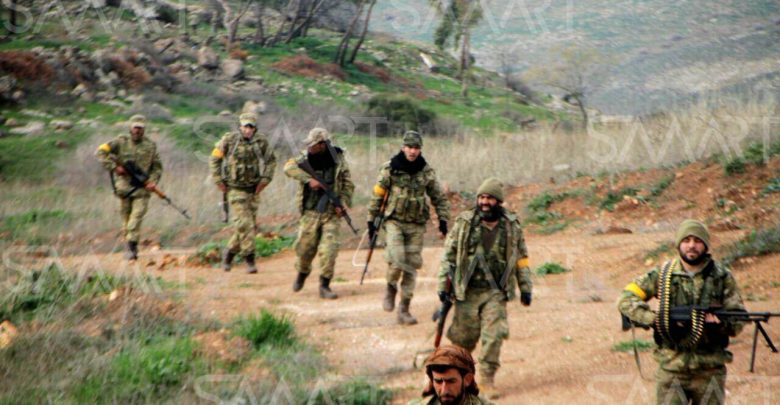
Uno sviluppo che rappresenta una conseguenza diretta delle sconfitte di Haftar a ovest di Tripoli e dell’arresto della sua offensiva a sud della capitale e a est di Misurata, determinate direttamente dall’intervento di militari turchi (stimati tra 500 e mille unità) e dei mercenari siriani arruolati da Ankara il cui numero era valutato a marzo in circa 5mila (a cui sottrarre almeno 500 tra morti, feriti e prigionieri) ma che secondo sarebbe salito attualmente a quasi 8mila unità, a conferma della volontà turca di aiutare il GNA a respingere il nemico lontano da Tripoli e, lungo la costa a est di Misurata, di ricacciarlo a Sirte.
5e089aba42360428fc11a6ae-3-780x405-1
Il 6 maggio l’Osservatorio per i diritti umani in Siria (Ondus, con sede a Londra), ha reso noto che negli ultimi mesi il governo di Ankara ha inviato in Libia 7.850 miliziani, siriani e di nazionalità non precisate, mentre ha radunato nei centri di addestramento in Turchia circa altri 3mila combattenti. L’Ondus ha aggiunto che a quella data si registravano 261 mercenari siriani uccisi in battaglia in Libia.
Tali forze sarebbero concentrate al momento soprattutto a Tripoli e Garabulli per sostenere l’offensiva verso Tarhuna, 70 chilometri a sud di Tripoli dove le forze dell’LNA hanno il loro comando e resistono da settimane alla pressione nemica sostenuta dal cielo dai droni turchi che avrebbero distrutto al suolo nelle ultime settimane almeno due cargo dell’LNA, un Iliyushin Il-76 e un Antonov An-26 che per rifornire la città utilizzano la striscia d’asfalto della strada per Tripoli.
Al netto delle dichiarazioni dei contendenti la situazione su questo fronte è molto vivace ma non sembra indicare svolte decisive anche se la caduta di al-Watya nell’ovest potrebbe consentire al GNA di concentrare maggiori forze intorno a Tarhuna.
محور ترهونة
L’LNA resiste intorno a Tarhuna e non lesina contrattacchi verso Garabulli il cui possesso permetterebbe alle forze di Haftar di tagliare la strada costiera impedendo i collegamenti tra Tripoli e Misurata.
Al tempo stesso l’LNA ha accentuato i bombardamenti con razzi d’artiglieria su Tripoli, in particolare sull’aeroporto di Mitiga impiegato dai velivoli cargo e dai droni turchi, sul porto e sulle aree adiacenti e ambasciate di Italia e Turchia, i principali sostenitori del GNA. Bombardamenti che hanno indotto Ankara a minacciare Haftar di rappresaglie militari contro la Cirenaica.
I droni Wing Loong 2 dell’LNA (ma gestiti da contractors al solo degli Emirati Arabi Uniti) hanno bombardato anche il comando delle forze del GNA a Zuara, a ovest di Tripoli e le postazioni nemiche a Gharyan, ex caposaldo dell’LNA a sud della capitale, riconquistato dal GNA l’anno scorso.
ترهونة2_0
A causa della superiorità aerea del GNA, Haftar ha difficoltà a rifornire le truppe a sud di Tripoli e le incursioni dei droni turchi hanno colpito nelle ultime settimane diversi convogli che da Bani Walid puntavano a raggiungere Tarhuna dove il comando dell’LNA inquadra anche contractors russi e militari emiratini e giordani.
Anche sul fronte di Misurata l’LNA è stato costretto a ripiegare verso est, tra Abu Grein e Sirte.
Le difficoltà dell’LNA stanno inoltre incoraggiando alcune tribù a cessare il sostegno ad Haftar e a schierarsi col GNA come hanno fatto ad ovest le milizie berbere della regione del Nefusa e come sembra stia accadendo anche nell’area di Murzuq, a sud di Sebha, nel profondo meridione libico, dove i Tebu mobilitano le milizie e rifiutano di accettare il dominio di Haftar.

Haftar punta al controllo politico
Le sconfitte e le incertezze militari hanno determinato un approccio critico nei confronti del generale da parte dei suoi principali sponsor militari (Egitto, Russia ed Emirati Arabi Uniti) e maggiori aperture all’iniziativa di Aguilah Saleh, autorevole presidente del parlamento di Tobruk considerato vicino a russi e sauditi che vorrebbe un negoziato di pace con Tripoli.
Per scongiurare tale iniziativa, che potrebbe di fatto esautorarlo, il 27 aprile Haftar ha annunciato una sorta di golpe in Cirenaica dichiarando di accettare un fantomatico “mandato popolare” a governare tutta la Libia indicato da alcune manifestazioni di piazza di suoi fedelissimi.
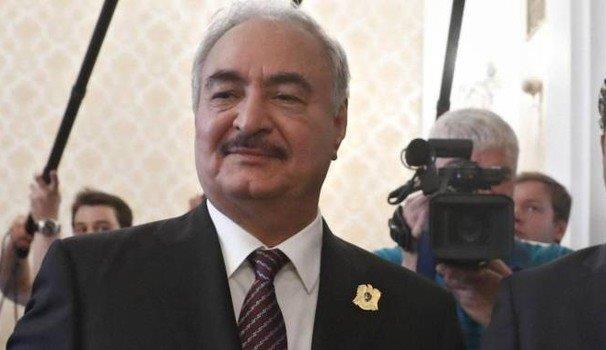
Haftar ANSA
Il generale ha annunciato in televisione di avere un “mandato per svolgere un compito storico” per “occuparsi del Paese”, attribuendosi pieni poteri per governare la Libia, in realtà solo i territori sotto il controllo delle sue forze.
Haftar ha quindi denunciato l’accordo di Skhirat col quale l’ONU diede vita al governo di Fayez al-Sarraj a Tripoli pur riconoscendo la legittimità del parlamento di Tobruk, fino a ieri vicino ad Haftar.
Con l’aiuto dei militari Haftar sta costituendo il Consiglio di sovranità libico, di fatto un governo i cui ministri saranno per lo più generali che esautorerà l’esecutivo della Cirenaica guidato da Abdullah al-Thani e terrà sotto scacco il parlamento di Tobruk, col compito di mettere a punto nuove elezioni presidenziali e parlamentari che sarebbero ovviamente pilotate da Haftar ed effettuate solo nelle regioni sotto il suo controllo.
Il 16 maggio un gruppo di deputati del parlamento di Tobruk ha condannato l’arresto da parte degli uomini di Haftar del ministro del Tesoro del governo della Cirenaica, Kamel al Hasi, considerato vicino alle posizioni favorevoli al negoziato con Tripoli di Aguila Salehg. In una nota una decina di deputati definiscono l’arresto del ministro “illegale” e ne chiedono l’immediata scarcerazione.
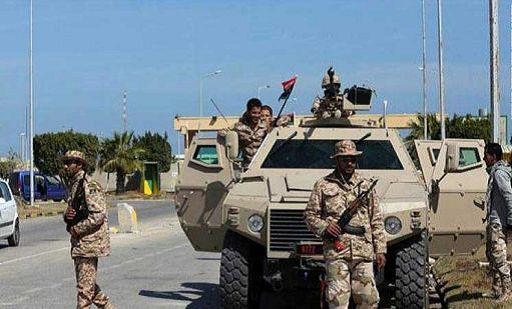
Roma, 6 giu. (askanews) - "Grande avanzata" delle forze che fanno capo al governo di unità nazionale libico che pur con "pesanti perdite umane" sono riuscite ad conquistare una caserma militare che dista appena 20 chilometri a sud-est di Sirte, roccaforte del Califfato sulla costa settentrionale del Paese Nordafricano: Lo riferiscono media locali. Secondo quando scrive sul suo sito on-line la tv Libya Channel il comando delle operazioni "al Bunian al Marsus" (dall'arabo "Struttura Solida" come viene denominata l'operazione per la liberazione di Sirte) del governo di unità nazionale "dopo violenti combattimenti con gli elementi del gruppo terroristico, le nostre forze hanno preso sotto il controllo la caserma militare nota (all'epoca di Gheddafi) come 'La Brigata al Saadi' nella zona di Abu Hadi" che si trova a 20 chilometri a sud-est di Sirte. Secondo fonti militari "la presa di questa sede apre lo spazio per il controllo della strada che collega l'entroterra con il centro di Sirte". Di "grande avanzata" verso Sirte ma anche di "dolorose perdite" parla l'inviato degli Stati Uniti in Libia, Jonathan Winer citato dal sito news locale al Wasat. In un tweet postato sul suo account stamane, l'inviato americano ha scritto che "le operazioni militari contro l'Isis in Libia sono riuscite a tagliare le vie dei rifornimenti a est come a ovest e sud della città di Sirte". Secondo al Wasat il pronto soccorso dell'ospedale di Misurata ha ricevuto ieri sera il corpo di tre militari uccisi nei combattimenti vicino a Sirte oltre ad una ventina di feriti.
Il “golpe” militare del generale, almeno ufficialmente, ha riscosso critiche e scetticismo anche tra i paesi alleati di Haftar anche se, come spesso accade, nella crisi libica il gioco delle parti è prassi comune e molti Stati hanno agito in passato in aperta contraddizione con quanto dichiarato. Tutti a parole si dicono a favore di negoziati di pace ma ognuno sostiene con armi e denaro la propria fazione.
La forza di Haftar, che a 76 anni e in un momento di complessiva debolezza militare non intende rinunciare al ruolo di protagonista, è riposta nella consapevolezza dei paesi arabi che le sue milizie costituiscono l’unico strumento con cui ostacolare la massiccia penetrazione turca (e del Qatar) in Libia.
In questo contesto si inseriscono i rifornimenti e i rinforzi in arrivo per l’LNA anche dalla Siria, dove secondi molte fonti i russi stanno arruolando migliaia di miliziani siriani governativi da trasferire in Cirenaica con i primi contingenti già sbarcati a Bengasi da un aereo cargo russo nella prima decade di aprile.
Un’operazione finanziata probabilmente dagli Emirati Arabi Uniti, oggi partner di Bashar Assad, che viene interpretata come un rafforzamento della penetrazione russa in Libia, dove già operano contractors della società militare privata Wagner stimati tra 800 e 1.200 unità da un rapporto confidenziale della missione dell’ONU in Libia rivelato dall’agenzia di stampa Reuters il 7 maggio.

L’irritazione di USA e NATO
Il ruolo russo in Libia e l’invio di combattenti siriani a rinforzo dell’LNA, denunciato anche dall’inviato speciale di Washington per la crisi siriana, Jim Jeffreys, sta irritando Stati Uniti e influenzando, di conseguenza, i vertici della NATO che però erano rimasti quasi impassibili di fronte allo sbarco a Tripoli di migliaia di miliziani jihadisti siriani arruolati da Ankara.
3SGy4fwe
Iniziative che stanno favorendo da un lato il ricompattamento tra l’Alleanza Atlantica e la Turchia e dall’altro più stretti rapporti tra il GNA e gli USA.
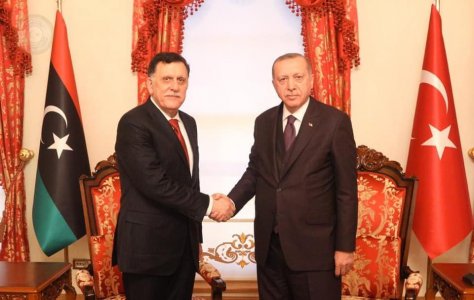
Il premier di Tripoli, Fayez al Sarraj (nella foto a lato con il presidente turco Erdogan), ha avuto il 15 maggio un colloquio telefonico con il segretario generale della NATO, Jens Stoltenberg, che ha confermato che il GNA è il governo legittimo della Libia ed ha aggiunto che i raid che colpiscono i civili “non sono tollerabili”, ribadendo che “non c’è soluzione militare per la crisi libica e che è necessario attenersi alle conclusioni della conferenza di Berlino”.
Lo stesso giorno Stoltenberg ha avuto un colloquio telefonico anche con il presidente turco Recep Tayyip Erdogan, ribadendo (lo riporta una nota di Ankara) la disponibilità della Nato ad aiutare il governo di Tripoli ad aumentare le proprie capacità securitarie e di difesa nel pieno sostegno a una soluzione politica alla crisi.
Nei giorni precedenti Henry Wooster, vice segretario aggiunto dell’Ufficio degli affari del Medio Oriente del Dipartimento di Stato aveva dichiarato che “gli Stati Uniti non sostengono l’azione dell’LNA contro Tripoli. L’attacco alla capitale devia le risorse da quella che è una priorità per noi, ovvero l’antiterrorismo”.

L’Operazione Irini  e la sfida energetica
Resta invece critica la valutazione del GNA nei confronti dell’Unione Europea dell’operazione navale Irini che dovrebbe contrastare le forniture di armi ai contendenti libici ma che di fatto ha le potenzialità per mettere in difficoltà solo i convogli navali turchi diretti a Tripoli e Misurata.
163550151-c759b104-00ee-4d40-85f0-dde90c747e66
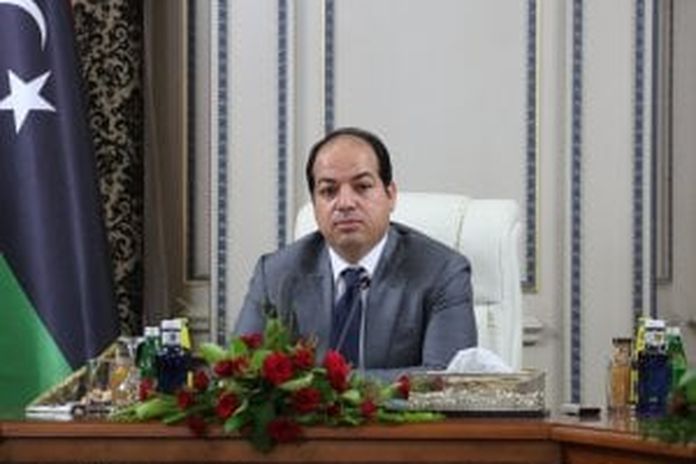
Il 4 maggio il vice del GNA, Ahmed Maitig (nella foto a lato ), ha affermato che l’Operazione Irini “non è sufficiente e trascura il monitoraggio delle frontiere aeree, marittime e terrestri orientali della Libia. L’Unione europea non ha consultato il nostro governo prima di prendere la decisione di avviare l’operazione che si affaccia sui confini orientali”, ha aggiunto Maitig durante un incontro con l’ambasciatore d’Italia a Tripoli, Giuseppe Buccino.
Al-Sarraj, in un’intervista al Corriere della Sera ha rincarato la dose dichiarando che la nuova missione europea ha “come obiettivo primario quello di fare rispettare l’embargo Onu contro l’invio di aiuti militari stranieri in Libia.
La sua area d’operazioni è il mare Mediterraneo ma ai nostri nemici armi e munizioni arrivano principalmente via terra e aria. I nostri porti saranno controllati, le nostre truppe penalizzate, mentre gli scali di Haftar saranno liberi di ricevere ogni aiuto e le sue milizie di utilizzare qualsiasi tipo di rinforzo militare”.
Superficiale e poco concreta la risposta giunta dal portavoce della Commissione Ue, Peter Stano. “Posso solo dire che Irini è un concreto esempio di come l’Ue voglia contribuire alla pace in Libia. Il suo mandato mira a contribuire al rispetto dell’embargo dell’Onu così da prevenire il flusso di armi verso la Libia e di partecipare al raggiungimento di una soluzione politica”.
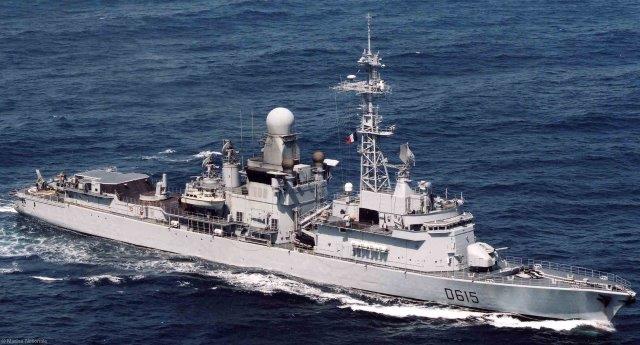
D615-Jean-Bart-17
Da un lato Irini non sembra avere molto supporto dagli stessi Stati Ue. è in mare con una sola nave, la fregata francese Jean Bart (nella foto a lato), che verrà però riturata a fine mese quando entreranno in azione una nave per operazioni anfibie (LPD) italiana e una fregata greca: navi che solo in estate potrebbero venire affiancate da una nave tedesca, probabilmente un rifornitore di squadra.
La ragione dell’avvio lento e poco convincente dell’operazione navale Ue a comando italiano sembra legato a due aspetti: i greci interpretano la missione come una iniziativa anti-turca mentre molti partner del nord Europa non hanno intenzione di farsi coinvolgere in un’iniziativa che potrebbe portarli ai ferri corti con Ankara.
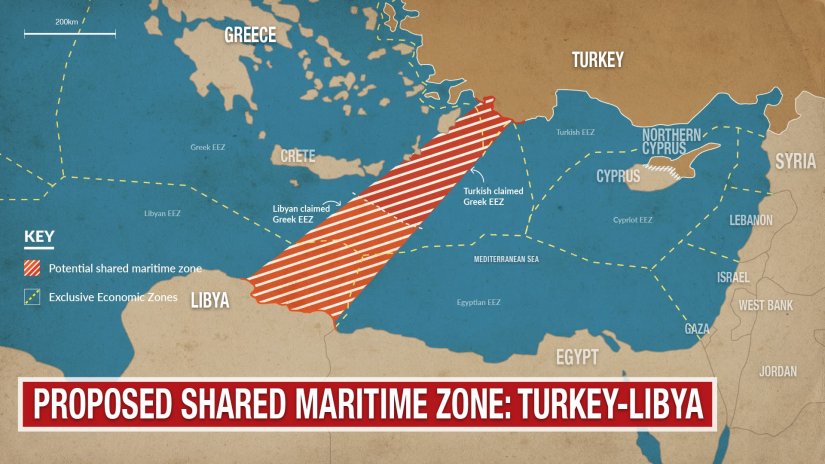
La Turchia, che la considera illegittima, rileva come non casuale il fatto che l’area operativa dell’Operazione Irini sia situata di fronte alle coste della Cirenaica, in quello specchio di mare che in base all’accordo bilaterale del 29 novembre 2019 appartiene alla Zona economica esclusiva (ZEE) Turchia e Tripoli intendono sfruttare congiuntamente.
Il 15 maggio la Turkish Petroleum Company (Tpao) ha chiesto al GNA il permesso di effettuare prospezioni petrolifere nel Mediterraneo orientale. “Le attività di prospezione inizieranno non appena il processo sarà completato”, ha dichiarato il ministro turco dell’Energia, Fatih Donmez, durante una conferenza stampa ad Ankara.
d975fa7d-1d87-4d0e-9d5c-8c663b90be0d
La dichiarazione è giunta dopo che i ministri degli Esteri di Grecia, Cipro, Egitto, Francia ed Emirati Arabi Uniti (in pratica tutti avversari di Ankara e sponsor del generale Haftar) hanno denunciato le “attività illegali turche in corso” nella ZEE di Cipro e nelle sue acque territoriali, nonché le “ingerenze” turche in Libia.
I cinque hanno ricordato “l’impegno ad astenersi da qualsiasi intervento militare straniero in Libia, come concordato nelle conclusioni della conferenza di Berlino e condannato “fermamente l’interferenza militare della Turchia in Libia” esortandola a “rispettare pienamente l’embargo sulle armi”.
Grecia, Cipro ed Egitto sono inoltre accomunati dalla condanna del memorandum d’intesa fra Ankara e Tripoli sulla delimitazione delle giurisdizioni marittime nel mar Mediterraneo, che a loro giudizio lede i loro diritti sovrani.

Gianandrea Gaiani

Giornalista bolognese, laureato in Storia Contemporanea, dal 1988 si occupa di analisi storico-strategiche, studio dei conflitti e reportage dai teatri di guerra. Dal febbraio 2000 dirige Analisi Difesa. Ha collaborato o collabora con quotidiani e settimanali, università e istituti di formazione militari ed è opinionista per reti TV e radiofoniche. Ha scritto diversi libri tra cui "Iraq Afghanistan, guerre di pace italiane" e “Immigrazione, la grande farsa umanitaria”. Dall’agosto 2018 al settembre 2019 ha ricoperto l’incarico di Consigliere per le politiche di sicurezza del ministro dell’Interno.

dissabte, 16 de maig del 2020

It’s Syrian vs. Syrian in Libya

https://foreignpolicy.com/2020/05/05/libya-civil-conflict-syrian-mercenaries-turkey-russia-gna-haftar/

Turkey and Russia are using desperate mercenaries from the last war to fight in the next one  

BY 
 | 


Mohammad Abu al-Saar, a mechanic at a car repair shop in Homs, Syria, was detained and tortured by the country’s ruling regime, like thousands of other protesters, in one of its dungeons. (His name is changed in this article at his request.) The day he was released, he picked up a weapon to seek revenge, guard his city, and usher in a new era of political freedom. It was April 2012, just a year into the rebellion—there was still hope for a positive outcome.

Eight years later, he is a hired gun, fighting in someone else’s war, over 1,200 miles away in Libya. And when he looks across the Libyan battlefield, there’s a good chance that he soon could be facing another Syrian.

Saar is among the Syrian rebels paid by Turkey to fight alongside the forces of the Government of National Accord (GNA), one of the sides claiming power in the protracted Libyan conflict, which began with an uprising against Muammar al-Qaddafi in 2011 and is now a battle for lucrative oil deals and regional influence. The GNA is recognized by the United Nations and backed by the Muslim Brotherhood, a transnational group that propagates political Islam with the support of powerful allies such as Turkey’s President Recep Tayyip Erdogan. Shared allegiance with the Brothers brought Turkey to the interim government’s aid, and its enhanced military support has recently turned the tide of the war in the GNA’s favor.

Saar, however, is just a pair of hands in the broader struggle. A 38-year-old father of four, Saar metamorphosed from a rebel to a mercenary as a consequence of prolonged privations inflicted by unending war in Syria. “My wife and four children live in a tent. I don’t have money to buy cement blocks to build a room for them,” he told Foreign Policy over the phone from Libya. “When my wife gave birth, I didn’t even have money to buy diapers and milk for the baby.”

In 2014, Homs was lost to Bashar al-Assad’s regime forces, and Saar moved with his family to rebel-held Aleppo. There he joined the Sultan Murad Division, a rebel group made up mainly of Syrian Turkmen trained and funded by Turkey. But Turkey’s intentions were not entirely altruistic; it supported the rebels, but it also beckoned them to fight for its own interests.

Saar is an Arab, not a Turkmen, but he chose to join the group to earn a living. In 2018, he was among the rebels hired by Turkey to oust Kurdish militias and hundreds of thousands of civilians from Afrin in northern Syria. (Turkey accuses the Kurdish militias of conducting terrorist attacks inside Turkey and instigating secession.) In Afrin, Saar was paid 450 Turkish liras, a paltry stipend that comes to $46 a month. Libya, however, is a much more profitable assignment. “In my four months in Libya, I have earned more than I did in years of fighting in Syria. I earn $2,000 a month,” he said, sounding relieved at the whopping jump in his income.

Back home in Syria, other former rebels, dealing with the same deprivation, were being enticed to join the same war—but on the side of the commander Khalifa Haftar, the GNA’s main rival backed by Russia, the United Arab Emirates, and Egypt.

As Turkey flooded Libya with its Syrian proxies, it also provided state-of-the-art drones and air defense systems. In March, Russia turned to Syria for reinforcements. It roped in its Syrian ally Assad to back its preferred Libyan warlord and began scouting for men willing to render services in a foreign conflict in exchange for cash.

Syrian rebels say the man tasked with leading this recruitment drive was Col. Alexander Zorin, who in 2016 served as the Russian defense ministry’s envoy at the Geneva-based task force on cessation of hostilities in Syria. Zorin is better known in Syria as “the godfather” of reconciliation deals between the regime and rebels in Ghouta, Daraa, and Quneitra. A Russian source confirmed that in early April, Zorin visited southern Syria, a region believed to be especially fertile ground for Russian recruitment not only due to rampant poverty but also owing to the absence of support from any other regional or global power. Many rebels in the area had already switched their allegiance to Assad in July 2018 after the United States refused them further help.

In cooperation with Assad’s intelligence officials, Zorin is believed to have initiated negotiations with a number of rebel groups to send them to fight in Libya. Abu Tareq (his name has been changed for this article), the leader of a rebel group that fought the Islamic State in Quneitra in southern Syria, told Foreign Policy he met Zorin and agreed to go to Libya along with his fighters. “We met him, and he told us we were going to Libya with the security company [Wagner],” said Tareq from Syria. “He made a generous offer, $5,000 per month for a commander and $1,000 for a fighter. Of course, we agreed, because the financial situation is horrible in our area.” Tareq added that the rebels were enticed not just with monetary inducement but also with amnesty for those who fled the draft and those against whom the regime kept a file for payback later. Abu Jafer Mamtineh, the leader of another rebel group in southern Syria, also proved credulous. He bused out over a hundred young men to be trained by the Russians at a training base in Homs in mid-April.

Ahmad Khatib, an insider with rebel factions in the south, backed Tareq’s account. (His name is changed at his request to protect his identity.) “Col. Zorin’s message was that the former rebels may expand their power and increase the number of their fighters on the condition that they send at least 1,000 men each to Libya,” Khatib said.

However, Tareq and Mamtineh, and the men fighting for them, soon discovered they had been misled. They were lured with the assurance that they would merely guard oil installations in Haftar-controlled eastern Libya, but upon arrival at their training center in Homs, they found out that they were expected to fight and die for Haftar—and that the monthly salary would be much lower, only about $200. “Another Russian general at the base in Homs, I didn’t know his name, read out the terms of the contract before all of us. It wasn’t what Zorin promised. We refused and asked to be sent back home,” said Tareq from Quneitra.

Russia has generally found it harder than Turkey to build a Syrian proxy force in Libya. But Libyan analysts say Syrians are already in eastern Libya strengthening Haftar’s defenses. Anas El Gomati, the founder and director of the first public policy think tank established in Tripoli, Libya, said that, while Russian mercenaries of the Wagner Group led the offensive in Haftar’s yearlong attempt to conquer Tripoli, Syrians had been sent to back up the warlord in eastern Libya. “Haftar and the Assad régime have a strong relationship, and loyalists have been sent to Libya in recent months,” he said. “Haftar is increasingly reliant on foreign powers to prop up his campaign. Mercenaries come at a cost, they don’t know the lay of the land, and are struggling to make ground in urban terrain.”

Haftar called a truce for Ramadan, but only after his self-styled Libyan National Army lost a string of towns to the Government of National Accord. He seems to be buying time to gather his ground troops and convince Russia to counter Turkey’s military might with yet more reinforcements of its own. Russia is still hedging its bets, pretending to be equidistant from all sides in Libya. But if it decides to ramp up its Libyan intervention, Moscow, like Ankara, will have plenty of desperate Syrians to choose from as potential recruits.

Meanwhile, the proxy fighters already in Libya are just hoping to make it back home alive. “I know my life is in danger here, many of us have been captured,” Saar said. “If I really make it back alive, I will open a shop.”
Anchal Vohra is a freelance correspondent for Al Jazeera and regularly writes for Foreign Policy. She is a  Beirut-based journalist covering the Middle East and South Asia. Twitter: @anchalvohra


dilluns, 30 de desembre del 2019

What are the implications of Turkey's military pledge to Libya?


By Sandrine Amiel & agencies • last updated: 17/12/2019

Turkey is ready to send troops to Libya, President Recep Tayyip Erdogan said on Sunday, after Ankara and Tripoli's internationally recognised government signed a security deal.

"We will be protecting the rights of Libya and Turkey in the Eastern Mediterranean," Erdogan told Turkish television. "We are more than ready to give whatever support necessary to Libya."

The bilateral deal, which provides for a quick reaction force if requested by Tripoli, was sent to parliament on Saturday but it is unclear when a vote will take place.

Ankara's latest move comes as the Libyan war enters a crucial stage, with eastern Libyan commander Khalifa Haftar launching what he said would be a "final battle" for Tripoli.

His offensive against the UN-recognised government began in April but has so far stalled outside the capital.

Euronews explores the reasons behind Turkey's military pledge to Tripoli and its possible consequences on the regional and international stage, at a time of rising tensions between Ankara and its European allies.

What's Turkey's interest in getting involved?
Turkey has said the military pledge to Libya was primarily motivated by legality.

Haftar "is not a legitimate leader...and is representative of an illegal structure," Erdogan said after meeting in Istanbul with Fayez al-Sarraj, prime minister of Libya's Government of National Accord.

But Turkey's interest in Libya is not new, expert Barah Mikail, director of Stractegia Consulting and Associate Professor at Saint Louis University in Madrid told Euronews.

"Ankara has sought to develop a policy of influence in the aftermath of the fall of Libya's former ruler Moammar Gaddafi," in 2011 Mikail said.

"But with Commander Khalifa Haftar's offensive against Tripoli in April 2019, the Turks found new ways to expand their political and military influence on the ground."

According to the expert, Turkey's strategic interest is to develop a Mediterranean policy which may compete with that of the Europeans.

Economic calculations are another factor, Mikail told Euronews, with Libya offering "huge prospects" in terms of infrastructure development and reconstruction.

Turkey may furthermore want to display its military capabilities by selling weapons to the so-called Government of National Accord (GNA) based in Tripoli.

"There could also be an ideological component to explore, given that Fayez Sarraj's government has the reputation to be subjected - even if it is less than before - to the influence of Islamists, in a context in which the Islamist orientations and beliefs of Turkish President Erdogan are all but secret," the expert told Euronews,

"But I doubt that this component prevails over the geopolitical aspects," he added.

How likely is a Turkish intervention?
According to the text of the military agreement sent to Turkish lawmakers, Tripoli could request vehicles, equipment and weapons for use in army, navy and air operations. It also provisions for new intelligence sharing.

Even before this agreement, there was ongoing military cooperation between Tripoli and Ankara. Last week, the UN Security Council found that Turkey, along with Jordan and the UAE, was among the governments violating the weapons embargo in Libya by arming warring sides.

As noted by Mikail, President Erdogan has so far emphasised Turkey's readiness to put military means at Sarraj's disposal -- rather than sending straight troops on the ground.

"Obviously we can't rule out anything but I would take what the Turks are saying about their will to send troops to Libya with a pinch of salt," the analyst said

"The Turks say that the simple fact for Tripoli to officially request such an intervention would make it happen. I dare to believe that Fayez Sarraj and his entourage will not only have to take into account the reluctance of their European counterparts on the issue but also calculate the risks of such an intervention before deciding to call it."

"And the risks associated with such an intervention are considerable," Mikail added.

Even within Turkey, there is far from consensus behind sending troops to Libya.

Utku Cakirozer, a lawmaker from Turkey's main opposition CHP and a member of the NATO parliamentary assembly told Reuters: "Turkey should not enter into a new adventure."

"The AKP government should immediately stop being a party to the war in Libya."

How would it affect regional stability?
Ankara's latest move risks confrontation with forces led by Khalifa Haftar based in eastern Libya, further destabilising a volatile region.

"A Turkish intervention in Libya would only increase the current destabilisation and raise the risks that other foreign armed troops may imitate the Turkish move," Mikail said.

"We have the ability to (intervene in Libya) but we haven't," Egyptian President Abdel Fattah al-Sisi told a youth forum in the Red Sea resort of Sharm El-Sheikh.

Sisi expressed his support for "national armies" in Libya, an apparent reference to Haftar's Libyan National Army (LNA).

Egypt is a regional rival of Turkey and one of the main backers of the LNA, which is battling forces aligned with the internationally recognised government in Tripoli.

In the past, Egypt has carried out airstrikes in Libya and has channelled material support to the LNA, according to UN experts.

"The UN Special Envoy to Libya keeps denouncing the fact that foreign interference is one of the biggest obstacles to solving the Libyan crisis -- he is a hundred times right," Barah said.

What would be the impact on EU-Turkey relations?
Turkey's pledge to offer military support to Libya comes at a time of heightened tensions between Ankara and EU countries on a number of fronts -- not least, Ankara's military intervention against the Kurds in Syria earlier this year.

dissabte, 16 de juliol del 2016

Haftar discusses weapons delivery to Libya in Russia

28.06

The leader of Dignity Opertion, Khalifa Haftar, arrived in Russia on Monday and discussed a number of issues including weapons deliveries with Russia’s Security Council Secretary Nikolai Patrushev and Defense Minister Sergei Shoigu, the Russian ambassador to Libya told Sputnik Tuesday.
Yes, he is in Moscow now. Yesterday he had a meeting with Secretary of the Russian Security Council Nikolai Patrushev, with the Russian defense minister. Today, he will have a meeting in the [Russian] Foreign Ministry,” Molotkov said.
He added that the sides discussed a number of issues, including Moscow’s efforts in strengthening and consolidation of Libya, as well as Russia’s weapon deliveries to the African nation.

diumenge, 25 de desembre del 2011

Russia: Opposition Faces Online Communication Problems

23.12.2011

The current political protest is network-based. Many of its participants, excluded from mainstream politics, are veterans of online battles. However, as most of them are joining the protest from different perspectives, offline communication between them could have been smoother.

A union against the common enemy, rigged election results, and Prime Minister Vladimir Putin's political machine: this is what has brought into one place representatives of Russia's liberal, social-democratic, and nationalist forces. On December 22, 2011, we saw them creating a coalition decision for the first and, hopefully, not for the last time.

All parties are very interested in legibility (as compared to the sliding legitimacy of the ruling regime) and therefore resort to online tools that would allow to reach a new level of transparency.

The revolution will be both tweeted and televised

And indeed, the protesters are a lot tech-savvier and much more transparent than their counterparts. The meeting of the organizational committee of the December 24 rally that was held on December 22 was very well live-streamed by rusotv.org, an online live-broadcasting media portal.

The ability to broadcast the events of December 2011 live online has made people around the world and in Russia the spectators of a truly historical event – a gathering of some 100-150 opposition activists, who represented thousands of the netizens and millions of not-connected Russians.

The meeting was moderated by Alexey Navalny, a politician-turned-blogger-turned-political-prisoner-turned-politician. Next to him were the nationalists (including Dmitry Krylov and Vladimir Tor) and the liberals (including Boris Nemtsov and former chess champion Garry Kasparov), social-democrats, anarchists, environmentalists, unionized car owners, the Pirate Party, and many others.

The key question of the meeting was to decide who would be the host at the December 24 meeting. It was not just an organizational issue, but the question of whether the different, polarized political groups would manage to find a formula that would suit the majority of the diverse citizen groups.

Earlier, the protesters had decided they would use two tools: the Facebook voting tool and Survey Monkey [poll temporarily unavailable] to let people add their own rally speaker candidates. Problems, however, emerged with both tools.

Platform bias or ease of rigging?

Denis Bilunov, representative of the “Solidarity” movement and a person responsible for the online polls, presented the results of the popular vote. Some 83,000 users took part in the Survey Monkey poll, but the results were rather disgruntling: Alexey Navalny came in first, but right after him were a neo-Nazi nicknamed “Tesak” and a fraudster businessman Sergey Mavrodi (both received about 20 percent of the votes). Bilunov recognized them as rigged (in his opinion, the SurveyMonkey service had been abused by a vote-stuffing bot) and proposed to disregard them.

Aside from these two ‘rigged' candidates (participants believed it was used by the authorities to discredit the voting system), the following candidates were on top of the list:

  • Yuri Shevchuk (singer)
  • Leonid Parfenov (journalist)
  • Boris Akunin (writer)
  • Alexander Belov (nationalist politician)
  • Konstantin Krylov (nationalist politician)
  • Dmitry Bykov (poet)
  • Vladimir Tor (nationalist politician)
  • Mikhail Efremov (actor)

It is important to note that in the Top 30 list, four nationalists were on high positions, while on Facebook there was none.

This led to a controversy. An anarchist who called himself Ukrop ('dill' in Russian) stated that these online elections “were as falsified as the official ones.” Boris Nemtsov, leader of Solidarity movement, who had been caught cursing at his political allies, supported this idea. As one representative proposed: “Let an IT guy create a program that would make 2,000 votes in a few minutes and let everyone see how easy it's to cheat online with such voting.”

The option of using SurveyMonkey in the future seemed to be recognized as flawed. Then Bilunov proposed to use either Facebook or Democracy2.ru (an e-democracy platform created by the author of “Cloud Democracy” concept Leonid Volkov). Geidar Djemal had a Bolshevik-style proposal of choosing delegates based on their “political suitability” and not on poll results.

The nationalists, however, didn't like Facebook voting, claiming there were “only liberals” there, and that the choice of the platform would have a significant impact on the outcome of the voting.

Ilya Ponomarev, one of the creators and main ideologists of the open voting, defended the results, saying that despite controversy, this was still the most massive online poll ever conducted in Russia.

Navalny formula

The option proposed by Alexey Navalny seemed to have aggregated all options expressed by the speakers. He followed those speakers who proposed a mixed approach: the majority of the speakers (mostly celebrities: actors, journalists, writers, and even the former USSR president Mikhail Gorbachev, whom he described as “inherently liberal”) are those who are on top of both the SurveyMonkey and Facebook lists, given they will attend the December 24 protest, plus the representatives from political groups: 2-3 persons from the nationalists (the speakers will be selected by Dmitry Krylov and Vladimir Tor), 2-3 from the leftists (selected by Ilya Ponomaryov and Sergey Udaltsov).

The voting, assembled after some major shouting, showed: 80 persons for Navalny's option, 32 against. The decision passed.

Those who participated decided to form a new political body that would unite the anti-government effort and continue the protests against the elections.

Rustem Adagamov, a popular blogger, remarked [ru]:

Хорошо бы всё у них получилось — у нас прямо на глазах строится новая демократия в стране.

I hope everything work out well for them - right in front of our eyes a new democracy is being built in the country.

And then he added [ru]:

Офигенно приятно смотреть на такое количество здравых, умных людей, слышащих друг друга. Это прямо новая Россия, которая мне очень нравится

Extremely pleasurable to watch so many sane, intelligent people who listen to each other. It's indeed a new Russia, which I really like.